With interest rates still volatile and markets continuing to fluctuate, two of the most common income-focused investments as of 2026 will be high yield bonds and Treasury bills. It is a situation where, once again, investors are confronted with one of the most common dilemmas: should they opt for potential growth, or go for safety? Although both instruments are capable of providing income, they are aimed at entirely different purposes.
Knowing what the differences are, you will feel confident enough to make an investment strategy.
High-Yield Bonds Defined
High yield bonds, also known as what might be considered a colloquial term – junk bonds, are used by businesses that are considered to have a lower credit standing. It’s considered a high-risk investment, but it offers high interest in return.
High-Yield bonds are characterized by the following:
- Greater risk because of a lower level of issuer credit quality
- Greater income and return potential
- Medium to long-term investment horizon
- Greater sensitivity to economic cycles and market volatility
- Suitable for yield-seeking investors who are willing to take risks
What are Treasury Bills?
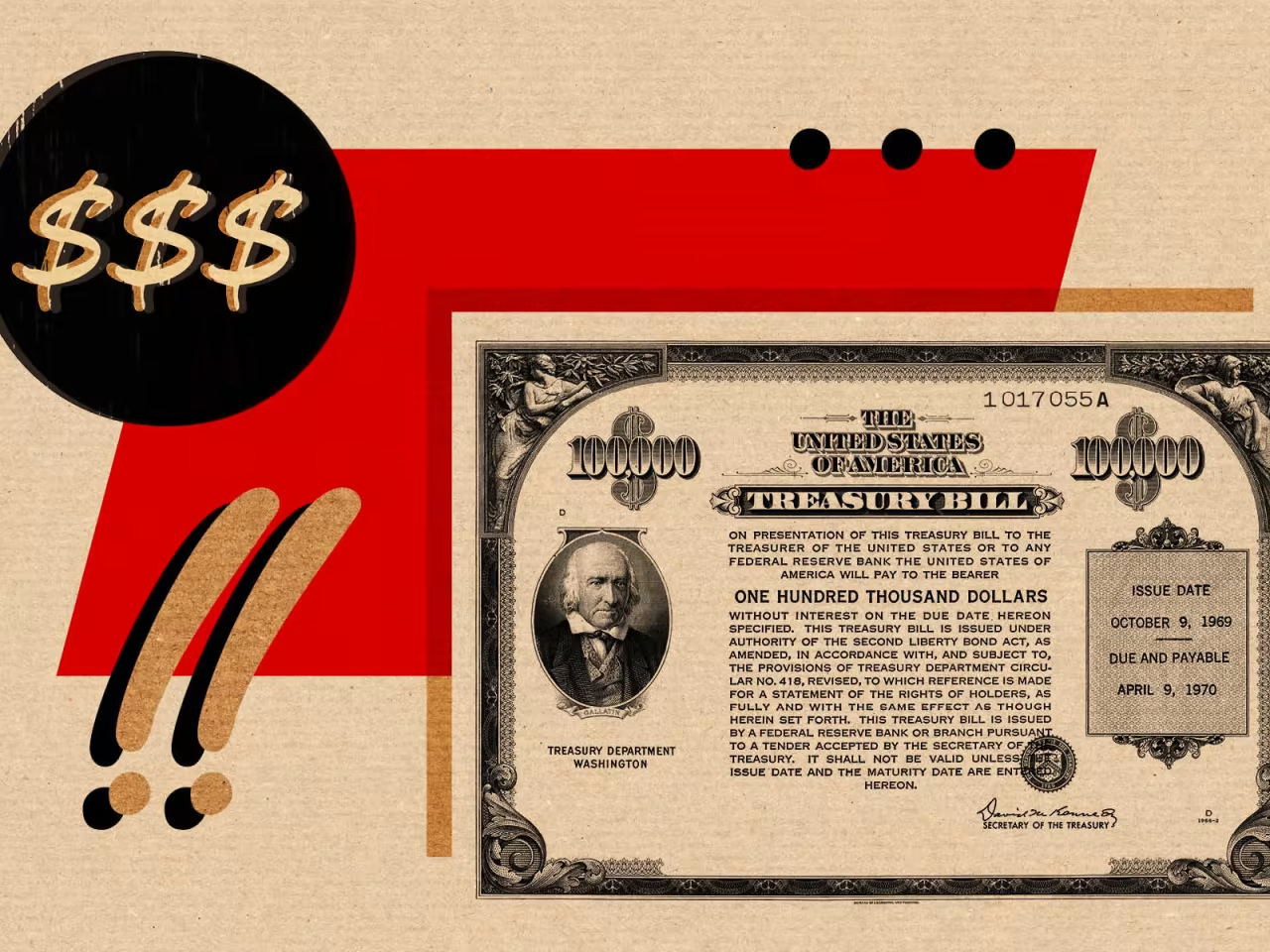
Treasury Bills The U.S. T-bills are, in effect, short-term government securities that are collateralized by the United State government, which is why they are considered one of the safest instruments to invest funds in.
Certain typical features of Treasury Bills are:
- Low risk with full security support from the government
- Lower but more stable, predictable returns
- Short-term maturity, normally less than a year
- Highly liquid, therefore easily convertible to cash.
It is best for capital preservation purposes or for the conservative investor.

High-Yield Bonds vs. Treasury Bills Outlook on Performance for 2026
However, what would matter the most would be the performance of the economy in the year 2026. In the growth stages, high-yield bonds tend to perform better because of the improvement in the profitability of a company. In times of uncertainty, performance in Treasury bills surpasses because of a stable economy.
The question, therefore, is which asset is universally better, but which one suits your situation.
Which Alternative Suits Your Investment Goals?
If there are goals of high income and growth, then high yield bonds are most appropriate. For someone who is more concerned with the safety of his funds and liquidity, Treasury Bills provide all the assurance that is required.
High-Yield Bonds vs. Treasury Bills 2026 Balanced Strategy
In most cases, a third way is available to many investors. By combining high yield bonds for income with Treasury bills for diversification, a strategic blend can be achieved that balances risk with the potential for return to a desirable level for your volatility.
Conclusion
Which of the two, high-yield bonds or Treasury bills, is best in 2026? It all depends on your risk tolerance, income goals, and horizon. Are you enticed by high returns? Then high-yield bonds are for you. Are your goals focused on unparalleled safety? Treasury bills are for you. By educating yourself on what high-yield bonds are, as well as Treasury bills, you can make your investment portfolios resilient, diverse, not only in 2026 but even in the future.